Tuesday, March 3, 2020

Day 18

Political Participation: Voter Turnout
Learning Targets:  Students will be able to....
  • Explain the roles that individual choice and state laws play in voter turnout in elections.
    Opener: Voter turnout in the US - Quickwrite

    Prompt:  List 3 possible causes for low voter turnout.  How could we increase voter turnout in the US?  What would be the advantages and disadvantages of a higher turnout?

    Activity #1: Voter Turnout Doc Analysis

    TIP-C

    Image result for democrat republican map
    Election laws generally fall into six different categories that can influence turnout: 
    1. voter-registration deadlines 
    2. restrictions on registrations and registration drives
    3. preregistration laws that allow people under 18 to register in advance of their first elections
    4. laws governing ease of voting (like early and absentee voting)
    5. voter ID requirements 
    6. polling hours.
    TIP-C


    OSAM

    ASAP

    In 1992, the most treasured voter was a voter that would sort of swing back and forth, one that might vote for Republican for president, Democrat for governor. The voter that didn't have that strong of a partisan ID. These were the voters that we targeted. 

    - James Carville, Campaign Strategist for Bill Clinton


    Activity #2: -  N-50 Voting Behavior

    LD - a form of electoral behavior. Understanding voters' behavior can explain how and why decisions were made either by politicians or by the electorate. Involves both political science and psychology. Political psychology researchers study ways to motivate and educate voters to increase participation

    SD - 

    Examples - 
    - Identity Politics - 
    - Rational Choice -
    - Prospective vs Retrospective -

    Non Examples - N/A

    Related Terms - Polling, Primaries, Suffrage

    Close - Exit Ticket - Claim Revision - 5 minutes

    Before you leave today, provide a 1-3 sentence response to the following prompt.  Your response should be a specific claim AND provide a line of reasoning.

    Prompt:  What advantages does an incumbent  (a president or congressman already in office that is seeking reelection) have over their competition (that has to win primary elections)?


    Friday, February 28, 2020

    Day 17 - 
    Political Ideology Wrap-up
    Learning Targets:  Students will be able to....
    • Describe different political ideologies on the role of government in regulating the marketplace.
    • Explain how the ideologies of the two major parties shape policy debates. 
    • Explain how U.S. political culture (e.g., values, attitudes, and beliefs) influences the formation, goals, and implementation of public policy over time. 
    • Describe different political ideologies regarding the role of government in regulating the marketplace. 
    Opener: R or D - A quick review

    Number 1-10, then decide whether each statement represents a Democratic or Republican stance
    1. More government is the problem, not the solution
    2. I would rather see my taxes cut and lose benefits
    3. Public education needs the assistance of federal funding
    4. Medical coverage is a right and should be provided by the government
    5. Corporations should be heavily fined for violating environmental laws
    6. There can be no limits placed on the right to bear arms
    7. Only legal immigrants should be entitled to any government benefits
    8. A flat tax rate is the only fair way in which to distribute the burden of taxes
    9. The federal deficit should be reduced even if we have to cut benefits
    10. Traditional family values and religion are the heart of society
    Activity #1: Political Party Stances

    See T-Chart on whiteboard

    Activity #2: Unit 4 Quiz

    Topics:

    • Political Ideology
      • What does "Liberal" and "Conservative" mean?
    • Political Socialization
      • How do we form our political views?
    • Party Stances
      • Democrat, Republican, Green, Libertarian
    • Polling
      • Types, uses, advantages/disadvantages, etc.
    Close - Student CPE Presentations 

    Tuesday, February 25, 2020

    Day 16 - 
    Economics and US Gov't
    Learning Targets:  Students will be able to....
    • Describe different political ideologies on the role of government in regulating the marketplace.
    • Explain how political ideologies vary on the government’s role in regulating the marketplace.
    • Understand how fiscal policy and taxation can shape the economic realities of citizens
    Essential Knowledge:
    • Liberal ideologies favor more governmental regulation of the marketplace, conservative ideologies favor fewer regulations, and libertarian ideologies favor little or no regulation of the marketplace beyond the protection of property rights and voluntary trade.
    • Ideological differences on marketplace regulation are based on different theoretical support, including Keynesian and supply-side positions on monetary and fiscal policies promoted by the president, Congress, and the Federal Reserve.

    Opener: Quickwrite

    • "Taxation without representation is tyranny"
      • James Otis
    • "The only certain things in life are death and taxes" 
      • Ben Franklin
    • “To compel a man to furnish funds for the propagation of ideas he disbelieves and abhors is sinful and tyrannical.” 
      • Thomas Jefferson
    • Article I of the Constitution gives Congress the power to levy taxes.  Besides raising revenue, what other motives do legislators have to tax a good or service?  Is there anything that government can't tax?

    Activity #1: Mini-Lecture - Taxes and Ideology

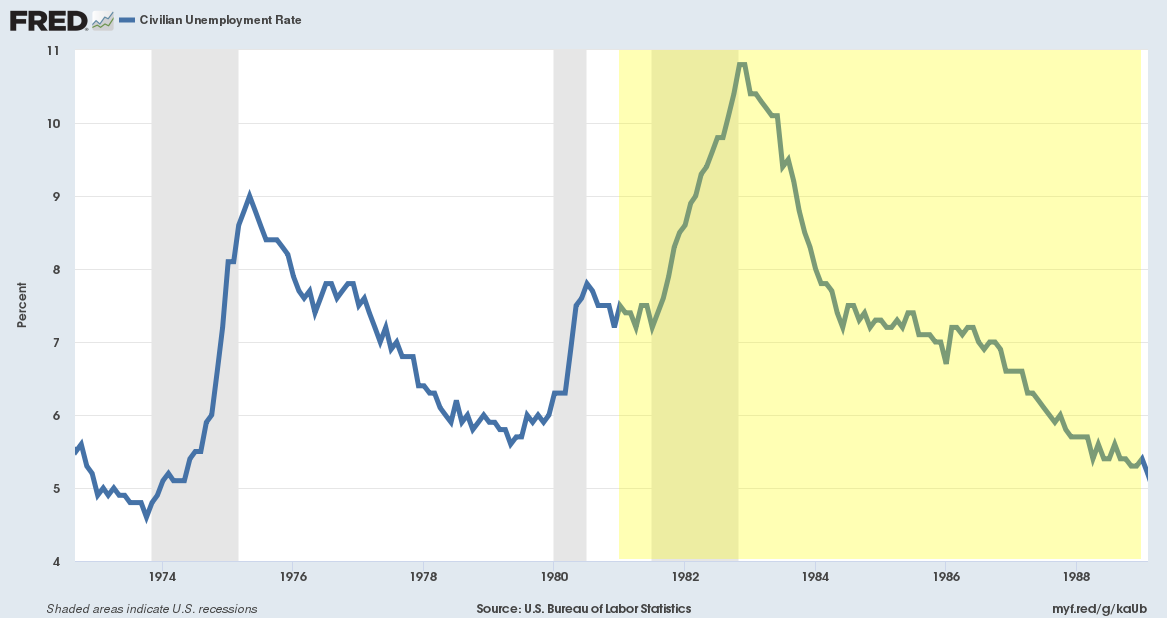
    • If consumers are spending their money, and business is struggling, would it be better for the federal government to lower taxes or just inject more money into the economy?

      • Supply-side economics and "Reaganomics" - Increase production by lowering regulations and taxation on business.  This increases the supply of goods and services (thus lowering the cost to consumers), creates jobs, and company profits "trickle-down" to workers.  This idea is generally favored by Conservatives/Repubicans

      • Demand-side economics a.k.a Keynsian economics - Government should spend money (create jobs, inject cash) which will encourage consumer spending.  This usually means borrowing, which increases the national debt . However, this increased demand will encourage companies to hire on more workers to meet this increased demand.  This idea is generally favored by Liberals/Democrats

    Activity #2: YOU MAKE THE CLAIM!

    Below are several documents, graphs, charts, cartoons, etc.  Quickly analyze each and then answer the following prompt using these documents and graphs to support your argument.  Make sure that you make a clear claim, provide a line of reasoning, and support your claim with evidence.

    Prompt:  If consumers are not spending their money, and business is struggling, would it be better for the federal government to lower taxes or just inject more money into the economy?

    1.


    2.
    Media Name: keynesian-sharks.jpg

    3.
    Consumer_sentiment_aug_2011

    4.
    https://www.thebalance.com/trickle-down-economics-theory-effect-does-it-work-3305572

    5. 


    Close - Student CPE Presentations 
    Day 15 - B Day Enrollment

    While you are waiting to enroll, complete this political poll built by your fellow Northman:

    2B take this:  https://forms.gle/1Pk8TgSpptktenem8

    3B take this:  https://forms.gle/mnbdRUh1VszP1H2j6

    Monday, February 24, 2020

    Day 15

    Public Opinion: Analyzing polls about polling

    Learning Targets:  Students will be able to....
    • Explain how public opinion data that can impact elections and policy debates is affected by such scientific polling types and methods as:
      • Type of poll (opinion polls, benchmark or tracking polls, entrance and exit polls)
      • Sampling techniques, identification of respondents, mass survey or focus group, sampling error
      • Type and format of questions
    • Describe the relationship between scientific polling and elections and policy debates is affected by the:
      • Importance of public opinion as a source of political influence in a given election or policy debate
      • Reliability and veracity of public opinion data

    Opener: ASAP

    Strategists and operatives should not design a strategy based off today's conditions. They should be setting a strategy for where the trajectory of polling is headed. 

        - James Carville, campaign strategist/political commentator, following the 2016 presidential election.

    Activity #1: Polling - Analysis

    #1


    #2


    Activity #2: -  N-50 - Polling

    LD - Polling a sampling or collection of opinions on a subject, taken from either a representative or random group of persons for the purpose of analysis.

    SD - 

    Examples - Telephone, internet, mail-in, exit polling

    Non-Examples - US Census, election "polls", 

    Related terms - Elections, Primaries, Political Parties

    Close - Build Your Own Poll

    Open the link below and post your own polling questions using the provided template

    https://docs.google.com/presentation/d/1VHIM61oFh9WMJzVE8hnQC5mOaGbMrrRrSMGjkehJr-s/edit?usp=sharing

    Choose what you believe is your best polling question and submit it via the link below to contribute to the "2020 AMCIT Election Issue Poll".  

    1A https://docs.google.com/forms/d/1Ijgy4bbgzon2sVHEIWRTET6Vu7vtl1bFFqDFpiwcGys/edit?usp=sharing

    2A
    https://docs.google.com/forms/d/1WmFkOSvRk4ocrYdgDSeKK-MSU9bjK4izA6K--qKJ6zs/edit?usp=sharing

    Simply press the + button on the right-hand side of the screen to add a question.


    Friday, February 21, 2020

    Day 14

    Public Opinion: Polling

    Learning Targets:  Students will be able to....
    • Explain how public opinion data that can impact elections and policy debates is affected by such scientific polling types and methods as:
      • Type of poll (opinion polls, benchmark or tracking polls, entrance and exit polls)
      • Sampling techniques, identification of respondents, mass survey or focus group, sampling error
      • Type and format of questions
    • Describe the relationship between scientific polling and elections and policy debates is affected by the:
      • Importance of public opinion as a source of political influence in a given election or policy debate
      • Reliability and veracity of public opinion data
    When people note that more and more voters are cutting their landline phones and that more and more people are refusing to pick up phone calls from numbers they don't know, they are identifying problems that the polling industry has long struggled with and continue to try to adapt to.

    -Kristen Soltis Anderson, 35 year old conservative writer and journalist

    Opener:  Quickwrite - 3 minutes

    Physicians often make life or death decisions about medical treatment based on the testing of just a few drops of blood.  Politicians often pin their entire career ambitions based on the outcome of a survey of just 1,000 voters.  

    What are two critical considerations in both of these scenarios when experts examine these samples?


    Activity #1: Polling - Mini-lecture
    • Polls
      • Opinion Poll
      • Tracking Poll
      • Benchmark Poll
      • Exit Poll
    • Sampling
      • Probability sampling is the basis for most survey research. 
        • If selected correctly, a randomly selected small sample of a population of people can represent the attitudes, opinions, or projected behavior of all of the people.
      • The fundamental goal of a survey is reliability (to come up with the same results that would have been obtained had every member of a population been interviewed)
      • Sampling error
    • Selecting a Random Sample
      • Considerations of geography
        • Rural, urban, suburban
      • Methodology
        • Random vs. Representative
        • Mail, landline, cell phone, email, online advert to take poll
      • Demographics - Compared to census data
        • Age
        • Education
        • Occupation
        • Income
        • Race
        • Gender
        • Voter registration status


    Activity #2: -  Pollin' Probs - Worktime

    With a partner, analyze each of the following polling questions and identify any potential problem(s) with each. Record these problems or questions in your notebook.

    1. A random anonymous telephone survey of 2,112 people asked, “Do you support or oppose the the President meeting with North Korean leader Kim Jong Un?” The answer choices were support or oppose.
    2. A survey of 1,229 people exiting a local Wal-Mart asked, “Do you approve or disapprove of how Congress is handling the economy?” The answer choices were approve or disapprove.

    3. A random online survey of 850 people asked, “How likely are you to vote in the 2020 primary election?” The answer choices were very likely, likely, unlikely, not very likely.
    4. An online survey of 1,273 people asked, “Do you approve or disapprove of the legalization of marijuana?” The answer choices were: approve, disapprove, no opinion

    5. A random telephone survey of 1,333 people asked, “What should be done to improve healthcare?”
    6. A mail-in survey of 1,266 people asked, “Which party to you more closely identify with?” The answer choices were: Democrat or Republican
    7. A random telephone survey of 1,319 people asked, “Don’t you agree that police officers in Kansas City are underpaid?” The answer choices were: Agree, Disagree, No Opinion

    8. A survey advertised on Instafacechatweet of 1,285 people asked, “Do you favor lowering the drinking age to 18?” The answer choices were: Strongly favor, Favor, No Opinion, Oppose, Strongly Oppose

    9. A random telephone survey of 1470 people in Kansas City asked, “Do you support the return of voting rights to people convicted of violent felonies?” The answer choices were: Strongly support, Support, No Opinion, Oppose, Strongly Oppose.
    10. An online poll asked people if the death penalty should be repealed. There were 2,385 responses. The answer choices were: Repeal the death penalty, Keep the death penalty

    2B - https://docs.google.com/forms/d/1ig48R_3M4yHilvJ2Jdb_lsjfRxysFNPycBllh8u70Uc/edit?usp=sharing
    3B - 
    4B - 
    1A - 
    2A - 
    3A - 

    Close - N-50 - Public Opinion

    LD - Data collected to measure the political opinions of private citizens regarding events and issues that influence which issues government officials choose to address.
    SD - 
    Examples - 
    Non-Examples - 
    Related Terms - 

    Tuesday, February 18, 2020

    Day 13

    Political Ideologies and Beliefs: Political Socialization

    Learning Targets:  Students will be able to....
    • Explain how the ideologies of the two major parties shape policy debates. 
    • Explain how U.S. political culture (e.g., values, attitudes, and beliefs) influences the formation, goals, and implementation of public policy over time. 
    • Describe different political ideologies regarding the role of government in regulating the marketplace. 
    When people note that more and more voters are cutting their landline phones and that more and more people are refusing to pick up phone calls from numbers they don't know, they are identifying problems that the polling industry has long struggled with and continue to try to adapt to.

    -Kristen Soltis Anderson, 35 year old conservative writer and journalist

    Opener - Post yourself on the spectrum on the board!

    Below are a series of issues. Take a minute and consider the each issue on the list and then place yourself in the appropriate quadrant by putting your post-it with your name written on it clearly on the political spectrum on the whiteboard.  We will work through these one at a time and then reset.
    1. Environmental regulation
    2. Public education
    3. Healthcare
    4. Immigration
    Activity #1:  TIP-C+


    Activity #2: Political Typologies Quiz - Think/Pair/Share

    https://www.isidewith.com/political-quiz

    or

    https://www.people-press.org/quiz/political-party-quiz/

    1.  Which question or questions did you feel failed to give you good options?  In other words, you didn't agree with either?

    2.  Which words used in the quiz did you feel might be "unfair" or "biased"?  What word would you have used?

    3.  Did the quiz ask more questions about "social" issues, or "government" issues?  In other words, was the quiz trying to determine your horizontal or vertical position on the spectrum we created in class last time?

    Close: -  N-50 - Political Parties

    LD - Political party is an organized group of people, often with common views, who come together to contest elections and hold power in the government. The party agrees on some proposed policies and programs, with a view to promoting the collective good or furthering their supporters' interests.

    SD - 

    Examples - Republican, Democrat, Green, Libertarian, Socialist?

    Non-Examples - Interest Groups (NRA, AARP, etc.), PAC's, "Independents" 

    Related terms - Elections, Primary, Caucus, Linkage Institutions, Conservative, Liberal, Moderate

    Close - CPE

    Wednesday, February 12, 2020


    Day 12

    Political Ideologies and Beliefs: Political Socialization

    Learning Targets:  Students will be able to....
    • Explain the relationship between core beliefs of U.S. citizens and attitudes about the role of government. 
    • Explain how cultural factors influence political attitudes and socialization. 

    We need to reject any politics that targets people because of race or religion. This isn't a matter of political correctness. It's a matter of understanding what makes us strong. The world respects us not just for our arsenal; it respects us for our diversity and our openness and the way we respect every faith.

         - Former President Barack Obama, State of the Union Address, 2016

    Opener:  Below are the most common sources for the formation of political opinion.  Choose the 2 that you feel are/were the most influential in developing your political opinions and craft a an argument for why that might be.   Be sure to provide a line of reasoning for your claim that allows others to fully understand your thinking.  
    • Peers
    • Parents
    • School/teachers
    • Famous figure
    • News Media
    • Social Media
    • Movies/shows
    • Political Ads
    • Other nation's policies
    When you have finished, compare your list with your neighbor.  Make sure that you take the time to explain your top and bottom choices in your ranking to that person.

    Activity #1: Statistical Analysis - TIP-C + M.C.


    1.  Which of the following is a potential consequence of the trend present in the chart above?

         a.  Campaign fund raising will become less important in future elections as more voters turn to social media.
         b.  Social media platforms will likely be forced to comply with Federal Election Commission restrictions and              guidelines.
         c.  Younger voters will likely demonstrate an increased involvement in politics and elections compared to                  previous generations.
         d.  New forms of mass communication can influence how younger citizens choose to learn about and                      support candidates.


    Activity #2: -  Political Socialization and Life Changes

    Below are a list of common life events that can alter a person's political ideology.  Which 2 do you think are most likely to alter or change your thinking as you get older and your circumstances change?  Craft another argument and line of reasoning to explain your thinking.
    • Graduating high school and/or college
    • Receiving your first "real" paycheck
    • Getting married
    • Buying a home
    • Having a child
    • Inheriting wealth
    • Financial strain
    • Being a victim of a crime
    • Retirement

    Close - Student Current Event Analysis Presentations (CPE's)

    Monday, February 10, 2020

    Day 11

    Political Ideologies and Beliefs: Political Socialization

    Learning Targets:  Students will be able to....
    • Explain the relationship between core beliefs of U.S. citizens and attitudes about the role of government. 
    • Explain how cultural factors influence political attitudes and socialization. 
    We need to reject any politics that targets people because of race or religion. This isn't a matter of political correctness. It's a matter of understanding what makes us strong. The world respects us not just for our arsenal; it respects us for our diversity and our openness and the way we respect every faith.

         - Former President Barack Obama, State of the Union Address, 2016

    Opener:  ASAP in your notebook

    As soon as any man says of the affairs of the State "What does it matter to me?" the State may be given up for lost. 
    ― From "The Social Contract" by Jean-Jacques Rousseau, an 18th century political philosopher


    Activity #1: Political Ideology and Socialization Interview

    https://docs.google.com/document/d/1yPL6GCaNO3o0kDTJg81QdURJuKc28FoaGPQfsBlnoQE/edit?usp=sharing


    Activity #2: -  Political Socialization - Quickwrite

    In no more than 3-5 sentences, explain how expanding the right to vote to American citizens over the last 150 years has influenced how we form our political views.
    • 15th Amendment - Granted all men the right to vote
    • 17th Amendment - Direct election of Senators 
    • 19th Amendment - Granted Women the right to vote
    • 26th Amendment - Changed voting age to 18
    • Voting Rights Act 1965 - Removed obstacles for voting (tests, taxes, etc)

    Close - Student Current Event Analysis Presentations (CPE's)

    Day 35 - AP Exam Prep for Test Takers Note:  The following is ONLY for students who have chosen to take the AP US Government and Politics...