Sunday, November 24, 2019

Day 34 - The Executive and the Bureaucracy - Corrections

Learning Targets:
  • Explain how the bureaucracy carries out the responsibilities of the federal government.
  • Explain how the federal bureaucracy uses delegated discretionary authority for rule making and implementation.
  • Explain how presidents have interpreted and justified their use of formal and informal powers.
  • Explain how the president can implement a policy agenda.

Opener:  Reflection - Record in your notebook

On a scale of 1-10, how well did you prepare for today's assessment?  
What helped you feel prepared?
What could have helped you feel prepared?

Activity #1: Test Corrections

See "Test Corrections Handouts"

All test corrections forms must be turned in on the table prior to leaving in order to receive credit.

Close:  Notebook and Corrections Turn-in

Thursday, November 21, 2019

Day 33 - The Executive and the Bureaucracy - Assessment

Learning Targets:
  • Explain how the bureaucracy carries out the responsibilities of the federal government.
  • Explain how the federal bureaucracy uses delegated discretionary authority for rule making and implementation.
  • Explain how presidents have interpreted and justified their use of formal and informal powers.
  • Explain how the president can implement a policy agenda.

Opener:  You will have 5 minutes to ask questions and ensure that you are ready for the assessment.

Activity #1: Executive Assessment

40 M.C.
3 Document Analysis
1 Free Response Question

Activity #2:  Notebook Turn-in

Close:  Reflection

On a scale of 1-10, how well did you prepare for today's assessment?  
What helped you feel prepared?
What could have helped you feel prepared?

Tuesday, November 19, 2019

Day 32 - The Executive and the Bureaucracy - Recap

Learning Targets:
  • Explain how the bureaucracy carries out the responsibilities of the federal government.
  • Explain how the federal bureaucracy uses delegated discretionary authority for rule making and implementation.
  • Explain how presidents have interpreted and justified their use of formal and informal powers.
  • Explain how the president can implement a policy agenda.

Opener:  From your collective analysis from the last several weeks, describe the powers of the executive branch, or specifically the president, cabinet, and the bureaucracy in 2-3 sentences that anyone could easily understand?

*Remember to consider the formal powers and roles of the president, the expansion of presidential authority, and the daily operations of the bureaucracy.

Activity #1: Kahoot

Executive Branch Review Kahoot

Bureaucracy Review Kahoot

Activity #2:  Executive and Bureaucratic 1 pagers

Close:  For review:

Executive

  • Roles of the president
  • Order of Succession
  • Executive Orders
  • Executive Agreements
  • Executive Privilege
  • Veto
  • War Powers Act
  • Amendments 20, 22, 24
  • Pardon
  • Lame Duck


Bureaucracy

  • Merit System
  • Civil Service Exam
  • Patronage
  • Discretion
  • Rule-Making
  • Iron Triangle
  • Congressional Oversight

Friday, November 15, 2019

Day 31 - Bureaucratic Simulation

Learning Targets:
  • Explain how the bureaucracy carries out the responsibilities of the federal government.
  • Explain how the federal bureaucracy uses delegated discretionary authority for rule making and implementation.


Opener:  Today you will have a chance to really experience operations within a bureaucratic organization.  Remember that interacting with the bureaucracy will require patience, maturity, and attention to detail.

Step 1:  Form a group of 3 and take one of the white forms from the stack.

Activity #1: Grant Applications

Each group will complete the "Educational Assistance Award" on behalf of their government teacher.   This grant money can be directed for educational supplies, programs, or facilities.  Once you have completed this form, take it to Mr. Clark's room (123) for form verification, and he will then direct you to the next step in the process.

YOU MUST HAVE ALL PARTS OF THE PROCESS COMPLETED AND RETURN TO YOUR ORIGINAL CLASSROOM IN NO MORE THAN 30 MINUTES!!!

The reward for successful completion will be determined by your regular government classroom teacher following the simulation.

Activity #2:  Bureaucracy AAR
What are the keys to success when navigating bureaucratic processes?
What are the most difficult parts of dealing with bureaucracy?
What would you do differently in the future?

Close:  N-50 - Congressional Oversight

LD
SD
Examples
Non-Examples
Related Terms

Thursday, November 14, 2019

Day 31 - Bureaucratic People Counting

Learning Targets:
  • Explain how the bureaucracy carries out the responsibilities of the federal government.
  • Explain how the federal bureaucracy uses delegated discretionary authority for rule making and implementation.


Opener:  If both the Executive and Legislative branches have age and residency requirements to serve, should the members of the bureaucracy have constitutional requirements?  Explain.
  • Patronage
  • Civil Service Exam
  • Merit System
https://www.test-questions.com/civil-service-exam-02.php
https://www.mometrix.com/academy/civil-service-exam/

Activity #1: How do I count?  The US Census Bureau

The count is mandated by the Constitution and conducted by the U.S. Census Bureau, a nonpartisan government agency. The 2020 Census counts the population in all 50 states, the District of Columbia, and five U.S. territories (Puerto Rico, American Samoa, the Commonwealth of the Northern Mariana Islands, Guam, and the U.S. Virgin Islands). Each home will receive an invitation to respond to a short questionnaire—online, by phone, or by mail. This will mark the first time that you will be able to respond to the census online.


Questions to answer:

  1. What connection does the US Census have to how federal funding is distributed to local communities?  Explain.
  2. How is census data used to determine federal representation?
  3. What demographic questions does the Census Bureau ask?  Why do you think they ask these kind of questions?
  4. What type of questions can the Census Bureau NEVER ask?
  5. Why do you think that it is required by law to respond to the Census Bureau questions?  Why do you think some people avoid responding?
  6. How could businesses, politicians, and marketing firms use census data?

Activity #2:  TIP-C
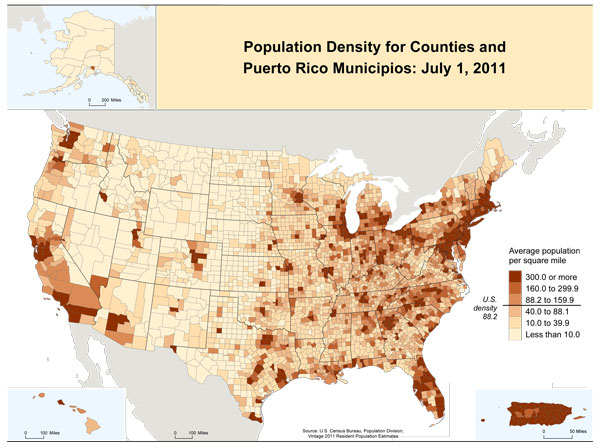
2011 population density map

Close:  N-50 - Congressional Oversight

LD
SD
Examples
Non-Examples
Related Terms

Tuesday, November 12, 2019

Day 30 - PEELING BACK THE RED TAPE!!!!

Learning Targets:
  • Explain how the bureaucracy carries out the responsibilities of the federal government.
  • Explain how the federal bureaucracy uses delegated discretionary authority for rule making and implementation.


Opener:  If both the Executive and Legislative branches have age and residency requirements to serve, should the members of the bureaucracy have constitutional requirements?  Explain.

  • Patronage
  • Civil Service Exam
  • Merit System

https://www.test-questions.com/civil-service-exam-02.php
https://www.mometrix.com/academy/civil-service-exam/

Activity #1: Regulation of your day 

Although Congress writes the laws, and the President executes those laws, it is the bureaucracy that follow through with their actual enforcement.  We have become so used to bureaucratic regulation that we rarely even give it a thought.
  • Make a detailed list of tasks and activities (outside of school) that you conduct each day.  You should have a list of at least 6.
  • Now make a list of rules and/or regulations regarding each activity.
    • For example, I get up and make coffee each morning.  My coffee maker has to meet safety regulations for electrical appliances, while the water I use must be be inspected to ensure that it does not contain certain contaminants, bacteria, etc.  The coffee that I use must list any additional ingredients, as well as information about where it comes from, on the packaging.  ALL OF THESE ARE REGULATIONS MADE AND/OR ENFORCED BY BUREAUCRATS!
  • Choose 2 activities from your list and try to determine what government organization(s) regulates that item or activity.
    • For Example, the FDA requires that under the "Food Safety Modernization Act" that all coffee processing facilities be secured against threats of contamination, bioterrorism, and food-borne illnesses.
  • Now choose 1 of your activities above and explain why regulating that item or task is so important.  How dangerous can a coffee maker really be?
Activity #2:  Using OSAM, ASAP, TIP-C


Unless bureaucracy is constantly resisted, it breaks down representative government and overwhelms democracy.  - President Ronald Reagan, 1982, State of the Union Address


Close:  N-50 - Iron Triangle

LD - The relationship between Congress, the bureaucracy, and interest groups that develops during the legislative process.  This essentially closes off influence from constituents.
SD
Examples
Non-Examples
Related Terms

Thursday, November 7, 2019

Day 29 - RED TAPE!!!!

Learning Targets:
  • Explain how the bureaucracy carries out the responsibilities of the federal government.
  • Explain how the federal bureaucracy uses delegated discretionary authority for rule making and implementation.

Opener:  If the legislature was to make a law that made government responsible for overseeing internet service and social media as "guaranteed public services and utilities" (like electricity, water, gas, telephone, etc.), which one of the 15 executive departments would likely be assigned the agency to oversee their regulation?  Explain why you chose that department.
  1. Attorney General: William Barr
  2. Secretary of Agriculture: Sonny Perdue
  3. Secretary of Commerce: Wilbur L. Ross, Jr.
  4. Secretary of Defense: Mark Esper
  5. Secretary of Education: Elisabeth Prince DeVos
  6. Secretary of Energy: James Richard Perry
  7. Secretary of Health and Human Services: Alex Azar
  8. Secretary of Housing and Urban Development: Benjamin S. Carson, Sr.
  9. Secretary of the Interior: David Bernhardt
  10. Secretary of Labor: Eugene Scalia
  11. Secretary of State: Mike Pompeo
  12. Secretary of Transportation: Elaine L. Chao
  13. Secretary of the Treasury: Steven T. Mnuchin
  14. Secretary of Veterans Affairs: Robert Wilkie
  15. Secretary of Homeland Security: Vacant

Activity #1:  TIP-C

Activity #2:  Commanding the Bureaucracy


Close:  N-50 Bureaucracy

LD - 

SD -

Examples - Federal Communications Commission (FCC), Internal Revenue Service (IRS)

Non-Examples -

Related Terms:

Monday, November 4, 2019

Day 28...STOP HAILING THE CHIEF SO MUCH!!!

Learning Targets:

  • Explain how presidents have interpreted and justified their use of formal and informal powers.
  • Explain how the president can implement a policy agenda. 
Opener:  From your collective analysis from the last two weeks, how would you describe the executive branch, or specifically the president, cabinet, and federal agencies in 2-3 sentences that anyone could easily understand?

Activity #1:  Executive Branch Mini-Lecture #2 - Evolution of the Office and its limitations

Activity #2: Orders, proclamations, power and prestige.

With a partner....

Use the link below to select an example of the types of executive orders and proclamations issued by presidents, and then answer the questions below in your notebook.

  1. ASAP analysis of your selected document.
  2. How did the president use the Executive Order, Proclamation, and/or other documents that you have selected to increase their authority and/or prestige?  
Close: N-50

Executive Authority
  • LD
  • SD
  • Examples - 
    • Executive Orders, 
    • Executive Agreements, 
    • Executive Privilege
  • Non-Examples
    • War Powers Act
  • Related terms

Friday, November 1, 2019

Day 27 - Executive Simulation AAR
Learning Targets:
  • Explain how presidents have interpreted and justified their use of formal and informal powers.
  • Explain how the president can implement a policy agenda. 
  • Explain how communication technology has changed the president’s relationship with the national constituency and the other branches.
Opener: Presidents' national address

Time for presidents to put our minds at ease!

Activity #1 - Presidential Simulation AAR

After having completed the executive branch simulation, take time to reflect on the following questions:
  1. What were the greatest challenges to success?  Identify at least 2.
  2. What were the keys to success?  
  3. What would you have done differently?

Activity #2 - Executive Wrap Up and Review

Before you leave, ensure that you have completed and turned-in the following:
Close:  Explain how and why presidents have expanded the power of the executive branch over the last 150 years.

Monday, October 28, 2019

Day 25 - Getting Ready for a busy day at the White House


Learning Targets:
  • Explain how presidents have interpreted and justified their use of formal and informal powers.
  • Explain how the president can implement a policy agenda. 
  • Explain how communication technology has changed the president’s relationship with the national constituency and the other branches.
Opener:  
  • How has the President's ability to communicate directly to the American electorate changed in the past 20 years?  What impacts do you think this has during times of crisis and emergencies?
Activity #1 - Presidential Simulation Prep

We will first elect a president to serve in the simulation.  Those wishing to run for president during the simulation MUST acknowledge and accept the grading criteria below:

1.  The President will assign each student a cabinet or advisor position.  These will be projected on the screen.  You have 10 minutes to assign your staff!
  • Each cabinet member (excluding those listed below) will be assessed based on the written proposal (how their department will aid in solving the crisis at hand) submitted to their President.
    • 10 Points – based on thoroughness, detail, realism, and sound judgment 
    • 5 Points – based on participation and effort
  • Presidents and Chief of Staff will receive an average of their cabinets' scores as their score.
  • Press Secretaries will submit a copy of the public address/statement given to the US populace explaining what the government is doing during this crisis.
2. Cabinet members and advisors will then complete the following tasks prior to the simulation:

  1. Provide a 1 paragraph summary of their department’s duties, mission, and history.  This can usually be found on the department's website.
  2. List the agencies that they manage under their department.
  3. Describe at least 2 past operations (1 success and 1 failure) that your department led.

Activity #2 - Simulation Tips

Critical Thinking Questions to consider
  • What does the situation look like?
    • Visualization helps you “see” and anticipate the problem. 
  • How does my department fit into this scenario?
    • What agencies do I control? What can they do? 
    • What responsibilities does my department have? 
  • What will happen next?
Writing Recommendations
  • Remember, it’s a proposal or plan of action.  This is the Executive branch!  
  • Be specific!!! The greater the detail, the clearer the proposal to your president.
    • Who? 
    • What – How many? 
    • When – How long? 
    • Where?
    • How? 
  • Be prepared to revise it as new information becomes available
Close:  BE READY TO GO AS SOON AS YOU ARRIVE NEXT CLASS!!!!  This was one thing that we said that we need to improve on in our class simulations.

Friday, October 25, 2019

Day 24...HAIL TO THE Commander in CHIEF!!!


Learning Targets:
  • Explain how presidents have interpreted and justified their use of formal and informal powers.
  • Explain how the president can implement a policy agenda. 
Opener:  
  • What character traits do you believe an ideal president should have?  What additional requirements should there be for a president, beyond those listed in Article II of the Constitution?
Activity #1 - Roles of the President Mini-Lecture

https://docs.google.com/presentation/d/1Rjl15SItEXXNkKQggX2VvOn9u6gQhQb2V5cJEN0wulQ/edit?usp=sharing

Activity #2 - Grading Presidents:

In your group...
  1. Quickly share what you already may know about the president that you have been assigned.
  2. Identify the two events that they are most famous for having been involved in.
  3. Determine which roles or powers that your president exercised while involved in this event.
  4. Grade their performance during these events (A,B,C,D,F) and explain why you gave them that grade.
Presidents for consideration:
Richard Nixon
Andrew Jackson
Woodrow Wilson
James Madison
Herbert Hoover
Jimmy Carter
Ulysses Grant

Activity #3:  Roles of the President Scenarios - Handout

https://docs.google.com/document/d/1Zskg1Q9PpAu9EwDVwXlNSInCLhKd4DRrfTEuFfudxes/edit?usp=sharing

Day 35 - AP Exam Prep for Test Takers Note:  The following is ONLY for students who have chosen to take the AP US Government and Politics...